
Buyer's Guide
Toggle Latches: 5 Types, 50–5,000 N Ratings
Toggle latches and draw latches compared: over-center, adjustable, spring-loaded, padlockable & heavy-duty. Load ratings 50-5,000 N. Material selection, sizing calculations. 21 models, factory direct pricing. Get quote.
Quick Answer
Toggle latches (draw latches) use lever action to clamp two surfaces together, compressing gaskets or holding lids shut. Main types: draw latch (pulling force), over-center (self-locking, vibration-proof), adjustable (variable grip), and lockable (padlock or keyed). Clamping force: 50–2,000+ N. Materials: zinc alloy (standard), 304 SS (outdoor/food), steel (economy). Size by gasket compression force × 1.5–2× safety factor.
1. What Are Toggle Latches?
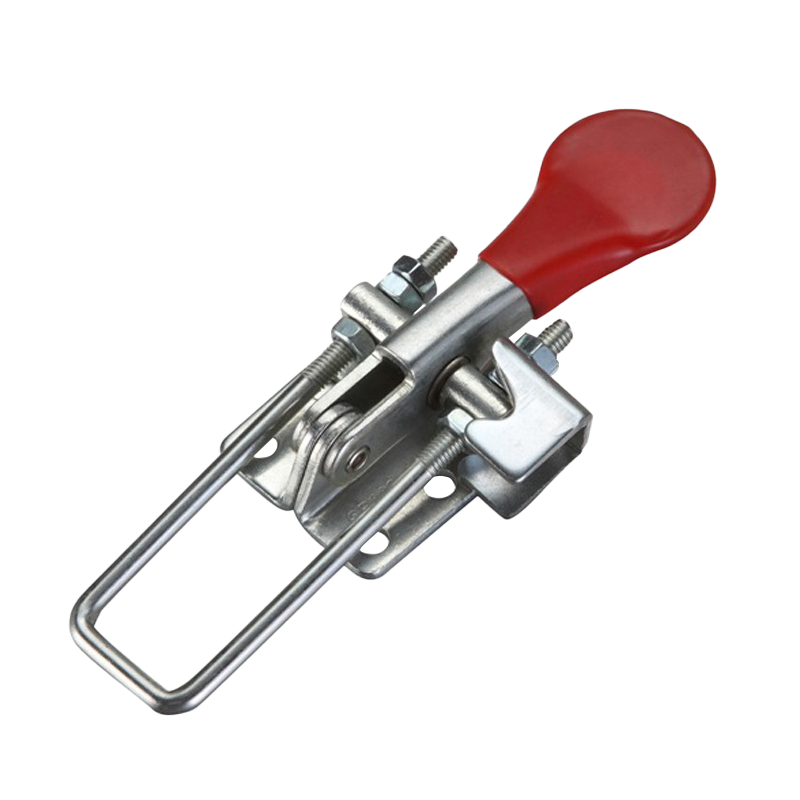
A toggle latch (also called a draw latch, catch, or hasp) is a clamping device that uses lever action to pull two surfaces tightly together. The basic mechanism consists of a lever handle, a link or connecting arm, and a hook or catch plate. When you close the lever, the linkage draws the hook toward the base, creating a powerful clamping force that compresses gaskets, seals joints, or simply holds a lid or door securely shut.
Toggle latches are everywhere in industrial and commercial applications: flight cases, road cases, toolboxes, industrial enclosures, medical equipment housings, military transit cases, food processing equipment, and vehicle storage compartments. They're valued for their simplicity, high clamping force relative to size, vibration resistance, and the ability to operate with one hand.
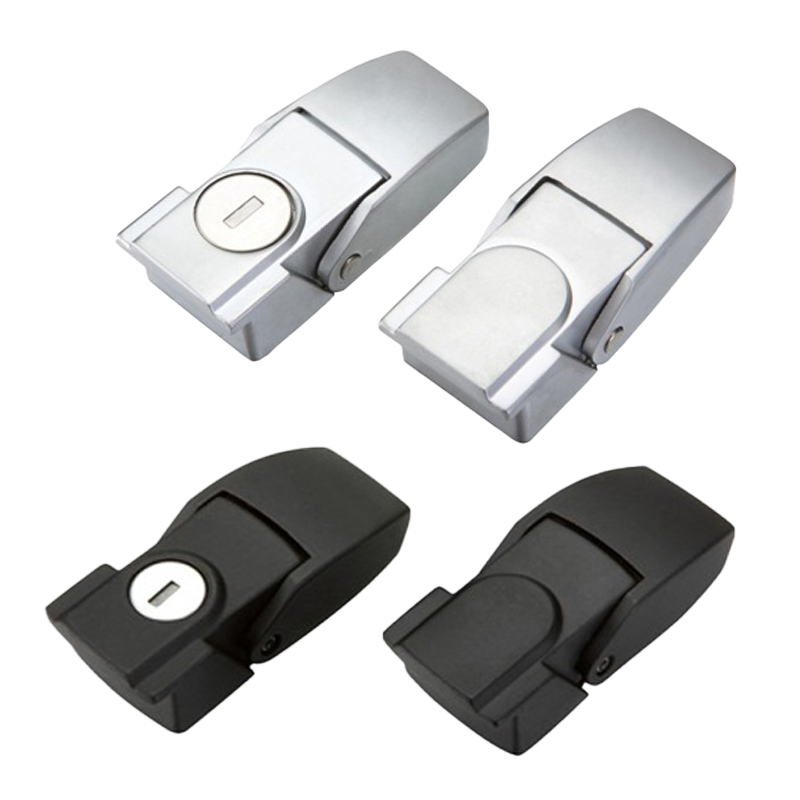
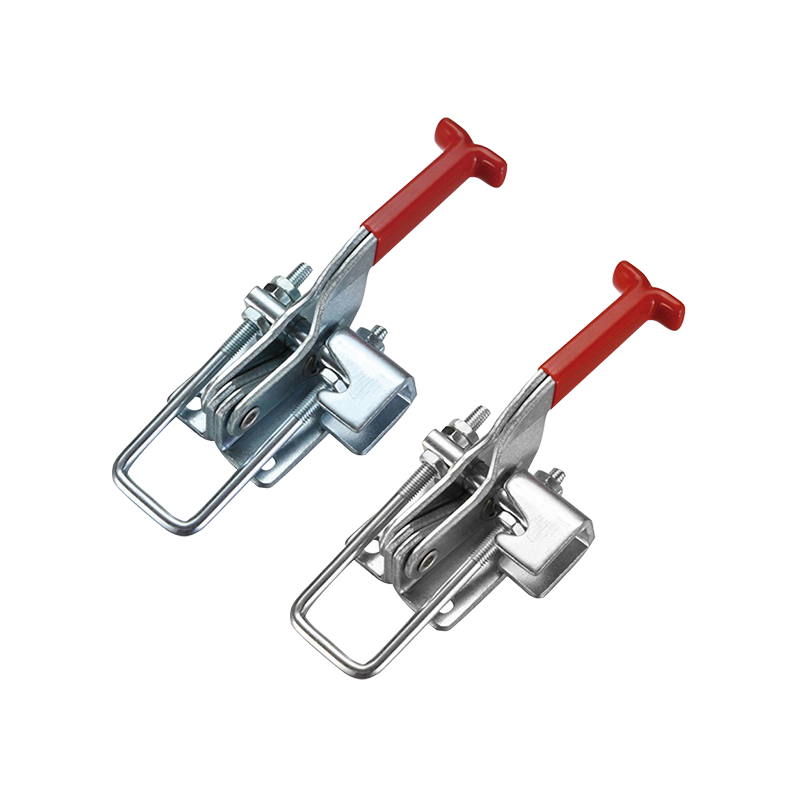
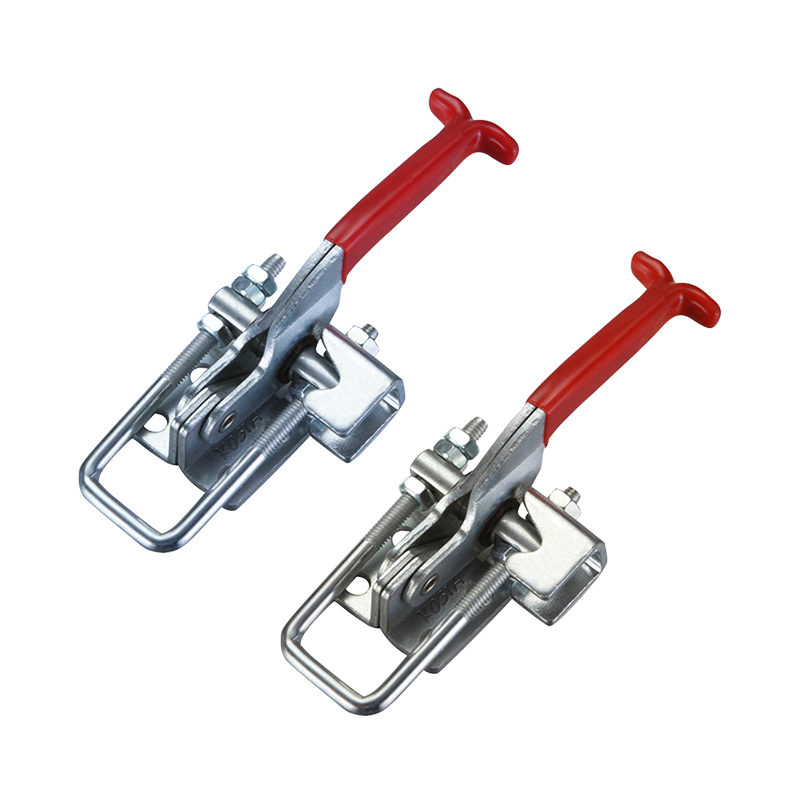
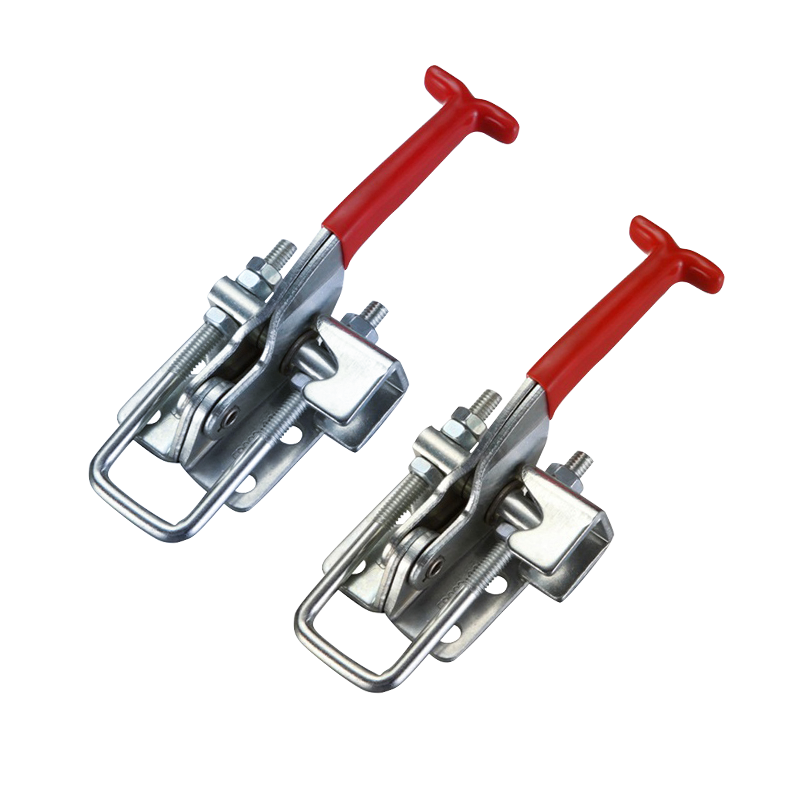
Hengchieh manufactures 21 toggle latch modelsin zinc alloy, stainless steel, and steel construction, covering clamping forces from 50N to 2,000N+.
2. Types of Toggle Latches
Draw Latches
The most common type of toggle latch. A draw latch uses a lever-and-hook mechanism where closing the lever draws (pulls) the hook toward the base plate, creating tension that pulls two surfaces together. The "drawing" action is what compresses gaskets and creates a weathertight or dusttight seal. Draw latches are the default choice for any application requiring compression force.
They come in light-duty (50–200N, suitable for small instrument cases), medium-duty (200–800N, toolboxes and equipment covers), and heavy-duty (800–2,000N+, large enclosures and vehicle panels) ratings.
Spring-Loaded Toggle Latches
Spring-loaded toggle latches add an internal spring that maintains constant tension on the hook even as materials expand, contract, or settle over time. The spring compensates for gasket compression set, thermal expansion of the enclosure, and minor alignment variations. This makes them ideal for outdoor enclosures exposed to temperature cycling and sealed equipment that must maintain consistent compression over years of service.
Adjustable Toggle Latches
Adjustable toggle latches feature a threaded hook or catch that can be lengthened or shortened to fine-tune the clamping distance and force. This is critical for applications where panel thickness varies, gaskets compress over time, or precise compression force is required. A common design uses a clevis-style hook with a threaded rod and locknut — turn the rod to adjust, then lock in position.
Adjustable models are standard for NEMA and IP-rated enclosures where gasket compression must be maintained within a specific range to preserve the environmental rating.
Safety Toggle Latches
Safety toggle latches incorporate a secondary locking mechanism that prevents accidental opening. This can be a secondary lever, a spring-loaded pin, or a padlock hole. They're required in vibration-prone environments (vehicles, mobile equipment, machinery), elevated installations where a falling panel is a safety hazard, and any application where unintended opening could cause injury or equipment damage.
Over-Center Toggle Latches
Over-center latches are engineered so the lever passes through a mechanical dead point during closing. Once past this point, external forces (vibration, pressure, impacts) actually push the latch tighter rather than opening it. The self-locking property makes over-center latches the preferred choice for vehicles, aircraft, vibrating machinery, and any mobile or dynamic application. They stay closed without additional locking mechanisms.
3. Toggle Latches vs Hasp Locks
Toggle latches and hasp locks are often confused because they both hold doors or lids closed, but they serve different purposes:
Toggle latches provide active clamping force — they pull two surfaces together under tension. They're designed for sealing (gasket compression), vibration resistance, and quick one-handed operation. They do not inherently provide security; anyone can flip the lever.
Hasp locks provide security through a padlock or integrated lock. A hasp consists of a hinged metal strap that folds over a staple (loop), and a padlock secures the two together. Hasps provide minimal clamping force — they simply prevent opening, they don't compress.
The hybrid solution: For applications needing both clamping and security, use a lockable toggle latch (toggle latch with a padlock hole or integrated key lock). This gives you the compression force of a toggle latch plus the security of a lock. Hengchieh offers several models with integrated padlock provisions.
4. Material Selection
The material choice for toggle latches depends on the operating environment and load requirements:
Zinc alloy die-cast is the industrial standard. It offers excellent strength-to-weight ratio, corrosion resistance, and dimensional precision from the die-casting process. Zinc alloy toggle latches are suitable for indoor industrial use, flight cases, instrument enclosures, and general-purpose equipment. Surface finishes include bright chrome, satin chrome, and black powder coating.
304 stainless steel is required for food processing (FDA/USDA compliance), marine and outdoor applications, chemical environments, medical equipment, and pharmaceutical manufacturing. Stainless latches resist corrosion from salt spray, cleaning chemicals, steam, and biological agents. They cost 2–3x more than zinc alloy but are the only option for wash-down environments.
Cold-rolled steel (zinc-plated) is the economy choice for indoor, non-corrosive environments. Steel latches offer high strength at low cost, making them suitable for toolboxes, storage containers, and cost-sensitive OEM equipment. The zinc plating provides basic corrosion protection for indoor use.
Engineering plastics (nylon/PA66) are used where electrical insulation, lightweight construction, or chemical resistance is critical. Plastic latches won't scratch painted surfaces, don't conduct electricity, and resist many solvents. They're common in electronics enclosures and laboratory equipment.
5. Sizing & Load Calculations
Proper sizing ensures reliable sealing and long service life. The key calculation is determining the required clamping force per latch.
Step 1: Calculate Total Compression Force
For gasket-sealed enclosures, the total force equals the gasket perimeter length multiplied by the compression force per unit length. Typical rubber gaskets require 3–7 N/cm (0.4–1.0 lb/in) of compression. A 1,200mm perimeter gasket at 5 N/cm needs 600N total compression force.
Step 2: Account for Internal Pressure
If the enclosure has positive or negative internal pressure (pressurized cabinets, vacuum chambers), add the pressure force: internal pressure (Pa) × door area (m²). A 500mm × 400mm door at 500 Pa internal pressure adds 100N of opening force.
Step 3: Divide by Number of Latches
Distribute the total force evenly across all latches. Using the example above: (600N gasket + 100N pressure) ÷ 4 latches = 175N per latch.
Step 4: Apply Safety Factor
Multiply by 1.5–2.0x for the specified clamping force per latch: 175N × 1.75 = 306N minimum per latch. Select a latch rated for at least 300N clamping force.
Latch spacing: For uniform gasket compression, space latches evenly around the door perimeter. Maximum recommended spacing is 200–300mm between latch centers for IP65+ enclosures. Closer spacing is needed for higher IP ratings or stiffer gaskets.
6. Applications
Flight Cases & Road Cases
Toggle latches are the standard closure for flight cases used by musicians, AV professionals, and military logistics. The over-center locking action resists vibration during transport. Typical requirements: medium-duty draw latch (200–500N), spring-loaded for gasket compensation, recessed mount to avoid snagging. Stainless steel or chrome-plated zinc for durability.
Industrial Enclosures & Control Cabinets
Sealed enclosures for electrical, pneumatic, or hydraulic controls rely on toggle latches to maintain IP/NEMA ratings. Adjustable draw latches with spring compensation ensure consistent gasket compression despite temperature cycling. Heavy-duty models (500–2,000N) are used for large panel doors. Key-locking models add security for electrical safety compliance.
Medical Equipment
Medical device housings use stainless steel toggle latches for biocompatibility, sterilization resistance, and compliance with FDA 21 CFR requirements. Smooth, tool-free operation is important for emergency access to defibrillators, crash carts, and portable diagnostic equipment. Latches must withstand autoclave sterilization cycles (134°C steam, 2+ bar pressure).
Vehicle & Truck Storage
Truck toolboxes, utility vehicle compartments, and trailer doors use heavy-duty toggle latches designed for vibration, dust, and weather exposure. Over-center action prevents rattling and accidental opening. Stainless steel or zinc alloy with heavy plating resists road salt, moisture, and UV exposure.
7. Frequently Asked Questions
What is the difference between a toggle latch and a draw latch?
How do I calculate the clamping force needed?
What materials are toggle latches made from?
Can toggle latches be locked?
What is an over-center toggle latch?
Browse Our Toggle Latch Range
Hengchieh manufactures 21 toggle latch models in zinc alloy, stainless steel, and cold-rolled steel. From light-duty draw latches to heavy-duty adjustable models — all from one factory.

Related Guides
Draw Latches: Complete Guide
7 types, load ratings & industrial applications
Compression Latches Guide
IP65/IP67, gasket compression, sizing
Types of Toolbox Locks
T-handle, paddle, cam & compression compared
Paddle Latches Guide
Flush-mount, T-handle & swing handle types
Draw Latch & Toggle Latch Manufacturer — OEM Available
21 models, selection guide, load ratings, MOQ & factory direct pricing