Buyer's Guide
Cabinet Hinge Types: 11 Industrial Styles
11 industrial cabinet hinge types compared: concealed, butt, piano, self-closing, pivot & lift-off. Load ratings up to 80 kg per pair. 304/316 SS & zinc alloy. 90°–270° opening angles. Factory direct, MOQ 500. OEM custom available →
Quick Answer
The 10 main cabinet hinge types are: concealed (European) for frameless kitchens, butt hinges for face-frame cabinets, piano (continuous) for long doors, self-closing for soft-close, pivot for heavy doors, spring for auto-return, barrel for small boxes, strap for gates/heavy lids, overlay for partial coverage, and inset for flush-mounted doors. Skip to the comparison table.
1. What Are Cabinet Hinges — And Why Choosing the Right One Matters
Doors sagging after six months? A heavy enclosure panel that won’t stay aligned? An IP-rated cabinet that leaks at the hinge point? These problems almost always come down to the wrong hinge.
The global cabinet hardware market is valued at over $12 billion, and hinges represent the largest single category. From a kitchen cabinet door that opens 20 times a day to an industrial control panel accessed once a month, the hinge must match the load, environment, frequency of use, and aesthetic requirements of its application. With over 136 hinge models in our surface-mounted andconcealed hinge lines, Hengchieh covers virtually every industrial and commercial hinge requirement. For a broader overview covering all 15 hinge types (not just cabinet hinges), see our complete types of hinges guide.
2. Types of Cabinet Hinges
Understanding the main hinge types is the first step to making the right selection. Each type has distinct mounting characteristics, load capacities, and aesthetic properties.
Butt Hinges
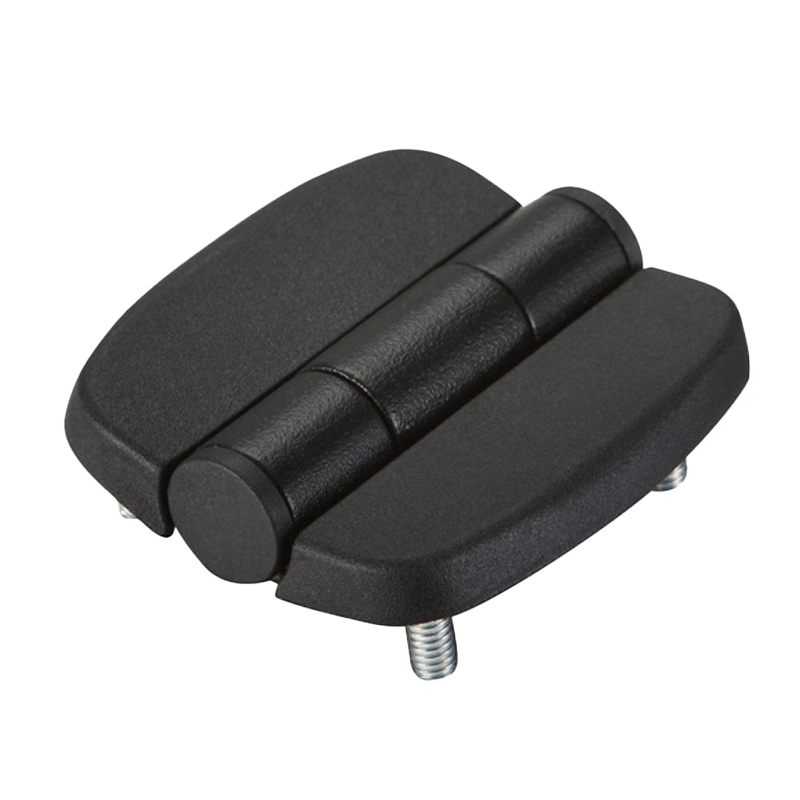
The butt hinge is the oldest and most universal hinge design. It consists of two rectangular leaves (or "butts") joined by a pin running through interlocking knuckles. One leaf mounts to the door, the other to the frame. Butt hinges are available in sizes from 25mm (1") for small cabinet doors up to 150mm (6") for heavy equipment panels. They support loads from a few kilograms to over 50 kg per hinge depending on size and material.
Best for: Industrial enclosures, electrical cabinets, server racks, and any application where visible hardware is acceptable and easy replacement is valued. Hengchieh's butt hinges are available in zinc alloy die-cast and 304 stainless steel with opening angles of 90°, 180°, and 270°.
Piano Hinges (Continuous Hinges)
A piano hinge — also called a continuous hinge — runs the entire length of the door or lid. The name comes from their original use on piano lids. By distributing the load across the full door height, piano hinges eliminate the stress concentration that occurs with point-mounted hinges, making them ideal for long, heavy doors and lids.
Standard piano hinges come in 304 stainless steel or cold-rolled steel strips and can be cut to any length. They're commonly used in toolboxes, flight cases, long equipment access panels, and bench-style lids. Typical load capacity is 10–30 kg per meter of hinge, depending on material thickness.
Concealed Hinges (Hidden Cabinet Hinges)
Concealed hinges — also marketed as hidden cabinet hinges, European hinges, or cup hinges — are completely invisible when the cabinet door is closed. They mount inside the cabinet using a cup bored into the door (typically 26mm or 35mm diameter) and a mounting plate screwed to the cabinet side.
The key advantage is aesthetics: no visible hardware interrupts the door face. Modern concealed hinges also offer three-dimensional adjustment (vertical, horizontal, and depth), built-in soft-close damping, and tool-free snap-on installation. They support overlay, half-overlay, and inset door configurations. Hengchieh manufactures 43 concealed hinge models, including heavy-duty versions rated for 25+ kg doors and 80,000+ open/close cycles.
Spring / Self-Closing Hinges
Self-closing door hinges incorporate a spring mechanism that automatically returns the door to the closed position when released. This is critical in fire-rated applications (where doors must self-close per code), commercial kitchens, clean rooms, and any environment where open doors create safety or environmental risks.
Spring hinges are available in single-action (closing from one direction) and double-action (swinging both ways). Spring tension is typically adjustable to match the door weight. For industrial use, Hengchieh's spring hinges are die-cast zinc alloy with stainless steel spring components for consistent tension over 100,000+ cycles.
Lift-Off / Detachable Hinges
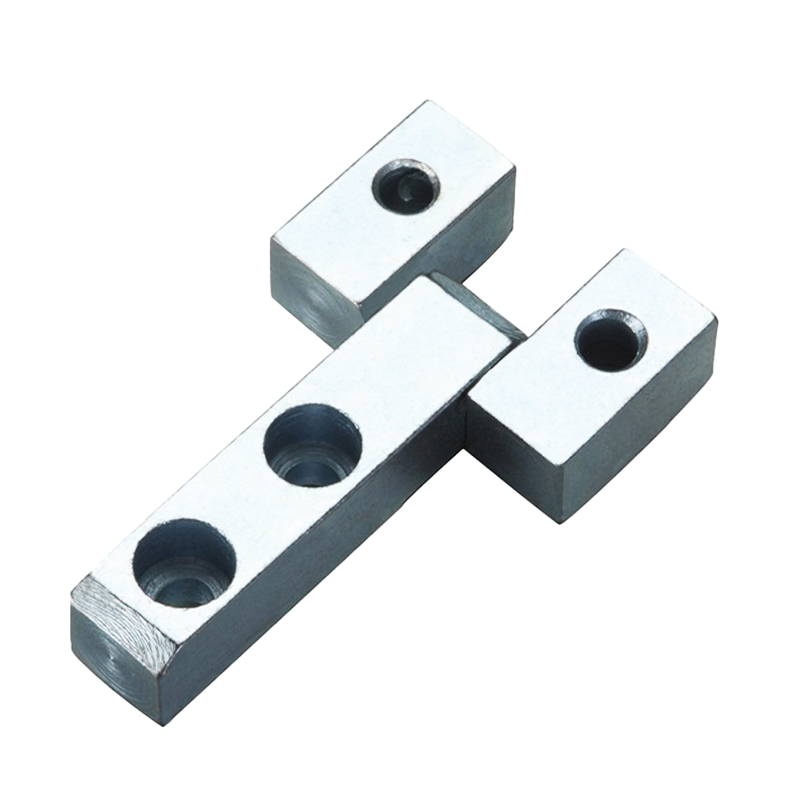
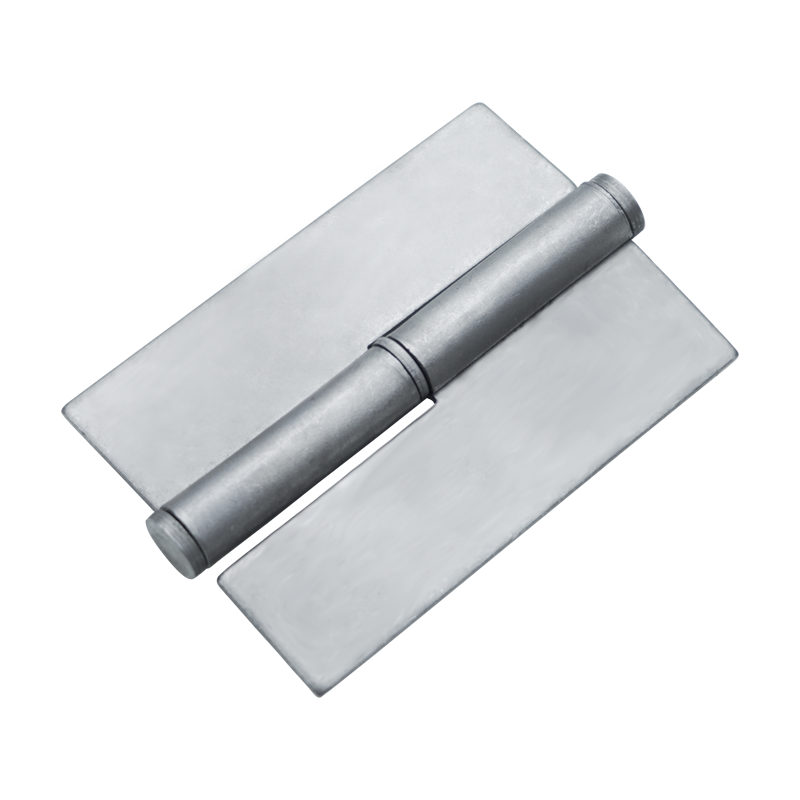
Lift-off hinges allow the door to be completely removed from the frame by simply lifting it upward — no tools, no unscrewing. This is invaluable for equipment enclosures that need full-access maintenance, shipping containers where doors are removed for loading, and any panel that must be periodically detached.
They come in left-hand and right-hand configurations (the pin is on one leaf only). Industrial lift-off hinges from Hengchieh use a hardened steel pin for durability and are available in loads up to 40 kg per hinge.
Pivot Hinges
Pivot hinges mount at the top and bottom of the door rather than along the side edge. The door rotates around a single vertical axis, which allows double-action swing and transfers door weight vertically through the floor pivot — reducing frame stress on heavy doors (50+ kg). Pivot hinges are used for large display cases, commercial vestibule entries, and oversized cabinet panels. They can be fully concealed within the door and frame.
Barrel Hinges (Bullet Hinges)
Barrel hinges are small cylindrical hinges mortised into the edge of the door and frame. They’re nearly invisible once installed, providing a minimalist aesthetic. Common sizes range from 8 mm to 16 mm diameter. Best for small boxes, jewelry cases, humidors, and lightweight access panels where loads are under 5 kg per hinge.
Knife Hinges
Knife hinges consist of two narrow leaves pivoting on a single point. Only a thin line is visible at the top and bottom of the door — the rest is completely hidden. Used in high-end cabinetry, museum display cases, and architectural installations where zero-visible-hardware is mandatory. Load capacity is typically under 10 kg per hinge.
Strap Hinges
Strap hinges feature long, triangular leaves that extend across the door surface. The extended bearing area distributes load over a wider surface, making them suitable for heavy gates, barn doors, toolbox lids, and large industrial access panels. Heavy-duty 304 stainless steel strap hinges can support doors exceeding 100 kg.
Wrap-Around Hinges
Wrap-around hinges wrap around the edge of the door and the face-frame, mounting on three surfaces (door face, door edge, frame face) for exceptional rigidity. They’re preferred for face-frame cabinets with heavy solid-wood doors and come in full-overlay, half-overlay, and inset configurations.
T-Hinges
T-hinges combine a short strap on the frame side with a long strap on the door side. The long leaf provides excellent leverage for heavy or wide doors. Common in sheds, utility cabinets, and gates. Available in mild steel (zinc-plated) and 304 stainless steel. Load ratings: 20–60 kg per hinge.
| Hinge Type | Visibility | Load / Hinge | Opening Angle | Best For |
|---|---|---|---|---|
| Butt | Visible | 5–50+ kg | 90°–270° | Enclosures, electrical cabinets, racks |
| Concealed (European) | Hidden | 5–25 kg | 95°–165° | Frameless kitchens, precision enclosures |
| Piano (continuous) | Visible | 10–30 kg/m | 180° | Toolboxes, flight cases, long panels |
| Spring / self-closing | Visible | 5–30 kg | 90°–180° | Fire-rated doors, kitchens, clean rooms |
| Lift-off | Visible | 10–40 kg | 180° | Equipment panels, maintenance access |
| Pivot | Hidden | 30–100+ kg | 90°–180° | Heavy doors, display cases, vestibules |
| Barrel | Hidden | < 5 kg | 90°–180° | Small boxes, jewelry cases, humidors |
| Knife | Hidden | < 10 kg | 90°–180° | High-end cabinetry, museum cases |
| Strap | Visible | 20–100+ kg | 180° | Gates, barn doors, heavy lids |
| Wrap-around | Semi-concealed | 10–30 kg | 110°–170° | Face-frame cabinets, solid-wood doors |
| T-hinge | Visible | 20–60 kg | 180° | Sheds, utility cabinets, gates |
3. Materials & Finishes
The material of a cabinet hinge determines its strength, corrosion resistance, weight, and cost. Choosing the right material for your environment is just as important as choosing the right hinge type.
Zinc alloy (die-cast) is the most popular material for industrial cabinet hinges. It offers an excellent balance of strength, precision, corrosion resistance, and cost. Zinc alloy hinges can be die-cast to tight tolerances (±0.05mm), making them ideal for concealed hinges that require precise alignment. Surface finishes include bright chrome, satin chrome, black powder coating, and nickel plating. About 70% of Hengchieh's hinge production uses zinc alloy.
304 stainless steel is the standard for harsh environments: outdoor enclosures, marine applications, food processing facilities, chemical plants, and medical equipment. It resists corrosion from moisture, salt spray, and most chemicals. The trade-off is higher cost (typically 2–3x zinc alloy) and slightly less dimensional precision in stamped parts. Hengchieh offers both mirror-polished and brushed stainless finishes.
Iron / cold-rolled steel is the most economical option for indoor applications where corrosion is not a concern. Iron hinges are typically zinc-plated or powder-coated for basic protection. They're common in indoor furniture, storage cabinets, and general-purpose enclosures.
Brass is used primarily for decorative applications and extreme marine environments. It has a distinctive warm tone and naturally resists saltwater corrosion. Brass hinges are common in marine hardware, antique-style furniture, and premium architectural installations.
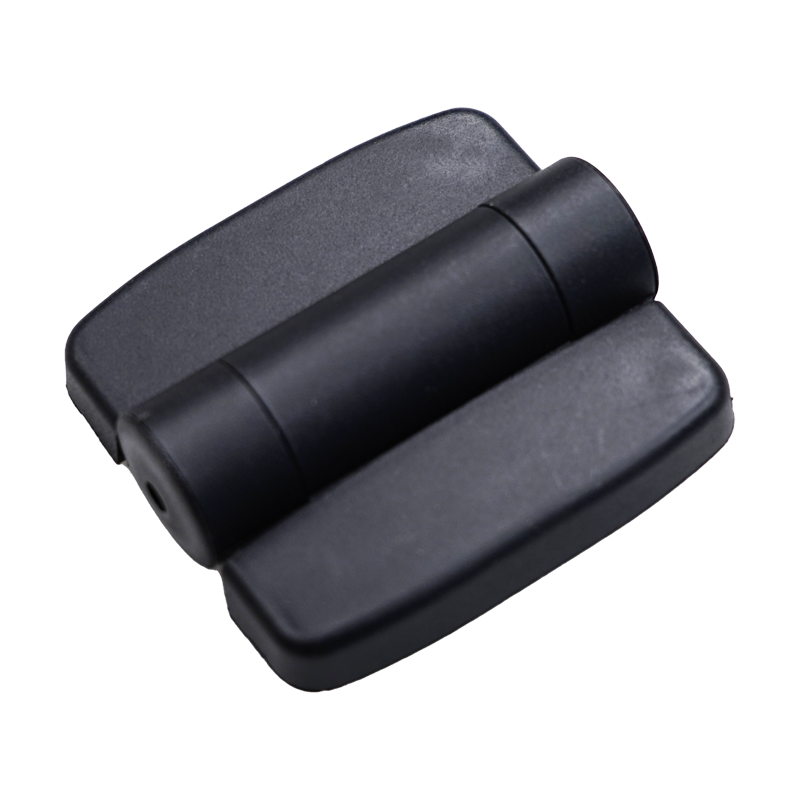
Engineering plastics (nylon / PA66) are used where electrical insulation, weight reduction, or chemical resistance is required. Plastic hinges won't scratch panels, don't conduct electricity, and resist many solvents. They're found in electronics enclosures, laboratory equipment, and clean-room applications.
4. Cabinet Construction: Face-Frame vs. Frameless
The cabinet construction method directly determines which hinges you can use. There are two fundamental approaches, and mixing them up is one of the most common hinge selection mistakes:
Face-frame cabinets have a solid wood frame (typically 38–50 mm wide) attached to the front of the cabinet box. The hinge mounts to this frame. Face-frame construction is traditional in North American cabinetry and allows the use of butt hinges, wrap-around hinges, and face-frame specific concealed hinges. The frame provides a strong mounting surface but reduces the usable interior width.
Frameless (European-style) cabinets have no front frame — the door mounts directly to the cabinet side panels. This design maximizes interior space and produces a sleek, modern look with minimal gaps between doors. Frameless cabinets require concealed (European) hinges with a mounting plate attached to the inner side panel. This is the dominant construction method in European kitchens and modern industrial enclosures.
5. Door Overlay Types
Overlay describes how much of the cabinet face the door covers when closed. Choosing the wrong overlay results in doors that collide, leave excessive gaps, or don’t align with adjacent doors:
Full overlay — the door covers the entire cabinet opening, with only 2–3 mm gaps between adjacent doors. This produces a seamless, modern appearance and is standard for frameless construction. Requires full-overlay concealed hinges (most common type).
Half overlay (partial overlay) — the door covers half of the face-frame or cabinet side panel. Used where two doors share a center partition — each door overlaps its half. Requires half-overlay concealed hinges with a shorter arm.
Inset — the door sits flush inside the cabinet opening, aligned with the face-frame or cabinet edge. This is the most precise and traditional look but requires the tightest tolerances (consistent 2 mm gaps all around). Inset concealed hinges use a straight arm with zero overlay.
Lipped (rabbeted) — the door has a rabbet (rebate) cut around its edges so that part of the door sits inside the opening while the lip covers the frame. Common in traditional face-frame cabinets. Requires lipped or offset hinges.
6. How to Choose the Right Hinge
Selecting the correct cabinet hinge requires evaluating four key factors:
Load Capacity
Calculate the total door weight and divide by the number of hinges. Each hinge should support the door's share with a safety factor of at least 1.5x. A 15 kg door with 3 hinges means each hinge carries 5 kg — specify hinges rated for at least 7.5 kg each. Heavy industrial doors (30+ kg) may require heavy-duty hinges with hardened steel pins and reinforced knuckles.
Frequency of Use
A kitchen cabinet might open 20 times per day (7,000+ cycles per year), while a server rack door might open twice a week. High-cycle applications need hinges rated for 100,000+ operations — look for die-cast construction, hardened pins, and built-in lubrication. Low-cycle industrial panels can use simpler stamped hinges.
Environment
Indoor, climate-controlled environments can use zinc alloy or iron hinges with standard plating. Outdoor installations require 304 or 316 stainless steel. High-humidity areas (pools, food processing) need at minimum zinc alloy with powder coating. Chemical exposure environments require specific material certification — consult Hengchieh engineering for compatibility recommendations.
Aesthetics & Concealment
If the hinge must be invisible, use a concealed (hidden) hinge. If visible hardware is acceptable or desirable (industrial look), surface-mounted butt hinges are simpler and often stronger. For a middle ground, consider hinges with decorative covers or matching panel finishes. Hengchieh offers custom finish matching for orders of 1,000+ pieces.
7. Installation Guide
Proper installation ensures optimal performance and longevity. Here's a general guide applicable to most surface-mounted and concealed cabinet hinges:
Surface-mounted butt hinges: Mark the hinge positions on both the door and the frame. For doors under 1 meter, position hinges 75–100mm from the top and bottom edges. For taller doors, add a third hinge centered between the two. Pre-drill pilot holes, mount the frame leaf first, then hang the door and attach the door leaf. Check alignment and adjust as needed.
Concealed hinges: Bore a cup hole (26mm or 35mm depending on model) at a depth of 11–13mm using a Forstner bit. Mount the hinge cup in the door using the provided screws. Install the mounting plate on the cabinet side. Clip the hinge arm onto the mounting plate and test the operation. Use the built-in adjustment screws to fine-tune the door position in three dimensions.
Critical tip: Always test the full opening angle before final tightening. Verify that the door clears adjacent panels and doesn't interfere with internal components. For enclosures with gasket seals, confirm that the hinge provides adequate compression force across the full perimeter.
8. Industrial vs Residential Hinges
While both serve the same fundamental purpose, industrial and residential hinges differ significantly in design priorities:
Industrial hinges prioritize load capacity, cycle life, corrosion resistance, and environmental sealing. They use heavier gauge materials, hardened pins, and stainless steel construction. Opening angles of 180° or 270° are common for full-access maintenance. IP-rated enclosures require hinges that maintain the seal integrity. Industrial hinges are often designed for tool-free door removal (lift-off type) to simplify maintenance.
Residential hinges emphasize aesthetics, soft-close functionality, and ease of adjustment. Concealed hinges dominate the residential market, with integrated dampers for silent closing. Standard opening angles are 90–110°. Materials are typically zinc alloy or nickel-plated steel. The residential segment values finish options (brass, oil-rubbed bronze, matte black) more than raw performance.
Hengchieh's hinge range spans both segments. Our surface-mounted hingesare engineered for industrial cabinet and enclosure applications, while ourconcealed hinges serve both high-end residential cabinetry and precision equipment enclosures where clean aesthetics are required.
9. Frequently Asked Questions
What are the most common types of cabinet hinges?
What is the difference between concealed and surface-mounted hinges?
What hinge material is best for outdoor use?
How do I determine the right hinge size?
Can Hengchieh customize cabinet hinges?
Browse Our Cabinet Hinge Range
Hengchieh manufactures 136 hinge models across surface-mounted and concealed styles, in zinc alloy, stainless steel, and engineering plastics. From standard butt hinges to custom concealed solutions.